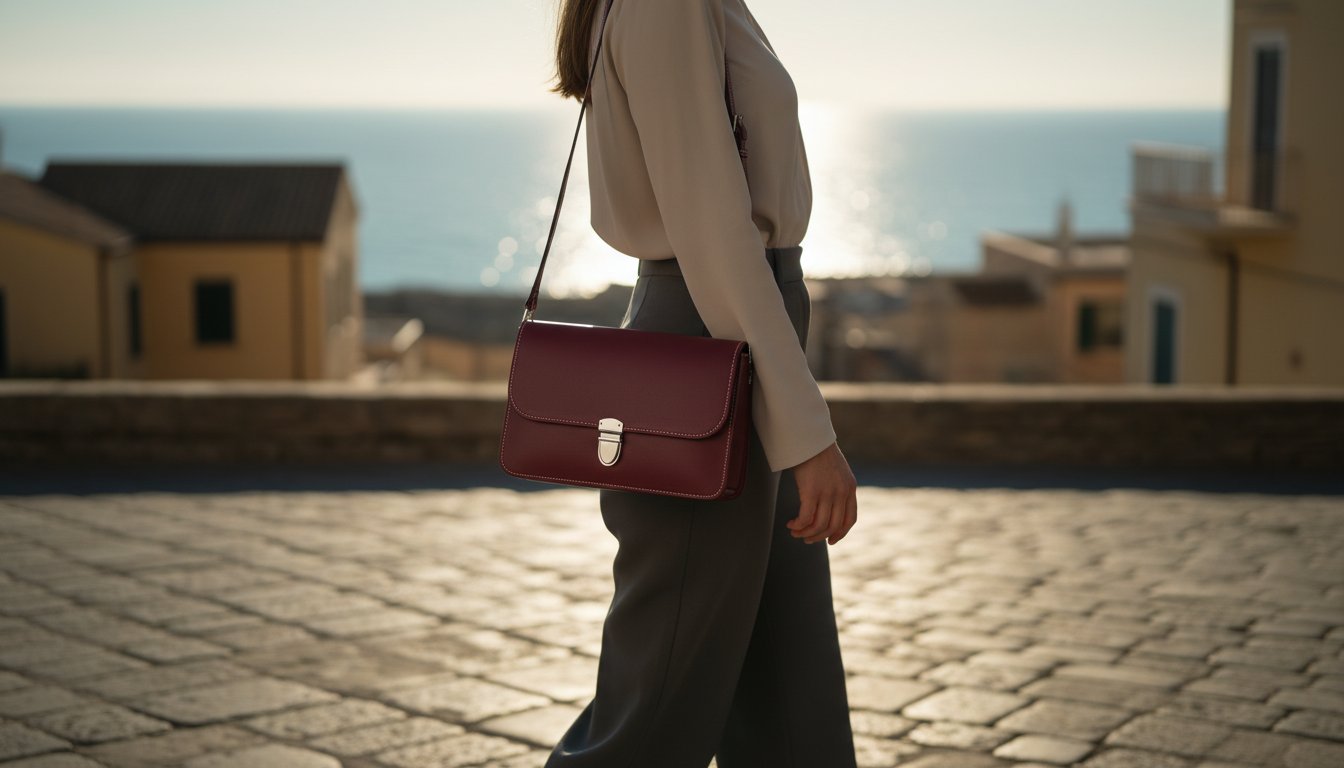
Article: Artisan Bags Made in Italy: The Soul of Sustainable Luxury
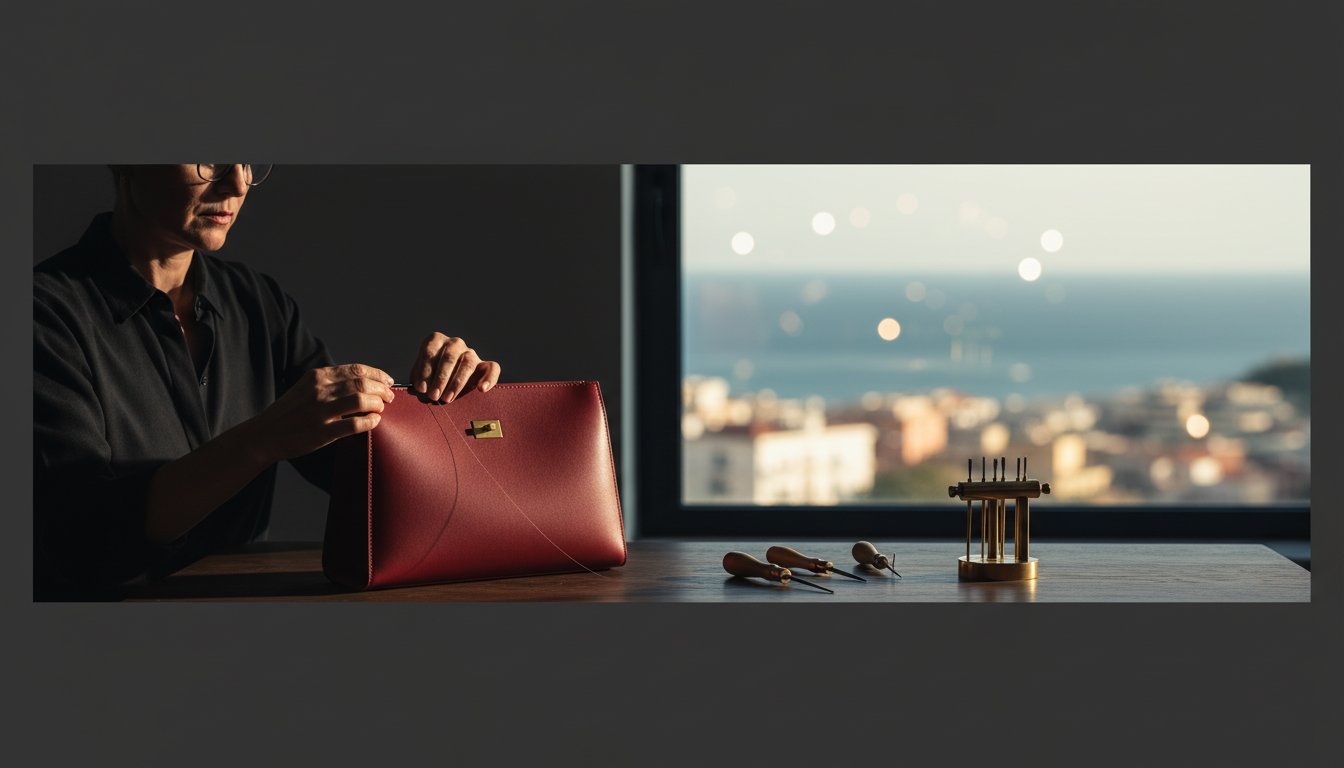
Artisan Bags Made in Italy: The Soul of Sustainable Luxury
Last October, a conscious collector spent 480 minutes in a sun-drenched Florentine workshop, watching a third-generation master hand-finish a single seam. It wasn't about the prestige of a logo, but the 70 years of heritage woven into the leather. Finding authentic artisan bags made in italy shouldn't feel like a confusing search through technical grades and marketing jargon. You deserve a piece that mirrors your inner values, a quiet symbol of elegance that carries a story rather than just a brand name.
You've likely felt the sting of realizing a luxury price tag doesn't always guarantee ethical production or lasting quality. It's exhausting to weigh your love for fashion against your commitment to the planet. This article invites you to discover the intimate world of Italian leather craftsmanship, where traditional mastery meets modern ethical elegance. We'll explore how to identify genuine full-grain quality and why supporting the 5,000 family-run workshops in Tuscany ensures you own a piece of history that truly lasts a lifetime.
Key Takeaways
- Understand how the human touch elevates a simple accessory into a soulful companion that carries its own unique story.
- Learn the secrets behind Italian mastery, from the rigorous selection of elite hides to the enduring strength of traditional hand-stitching.
- Discover the future of ethical elegance by exploring why artisan bags made in italy represent the pinnacle of sustainable luxury and non-toxic craftsmanship.
- Master the art of identifying genuine artistry through subtle visual nuances and the unmistakable, earth-bound aroma of vegetable-tanned leather.
- Explore the MIAR philosophy of minimalist grace, where every piece hand-crafted in Anzio becomes a vessel for your most cherished memories.
What Defines True Artisan Bags Made in Italy?
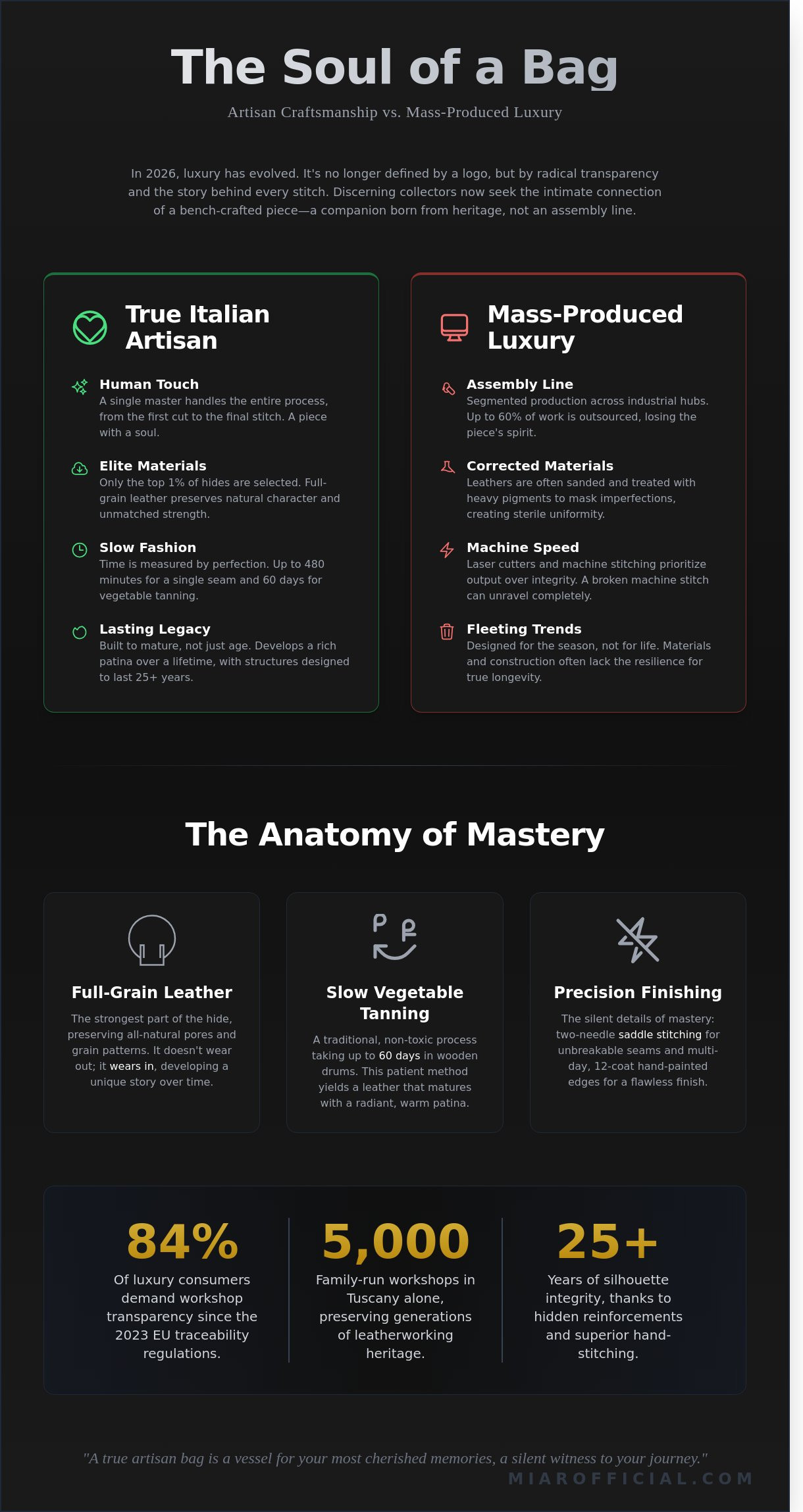
A bag is more than a container for our daily essentials; it's a silent witness to our journeys and a vessel for our stories. When we speak of artisan bags made in italy, we're describing a commitment to small-batch production where every stitch reflects a deliberate human decision. In 2026, the definition of luxury has shifted from mere logos to radical transparency. Discerning collectors now look beyond the surface. They seek the bench-crafted difference where a single master handles the leather from the first cut to the final hand-painted edge.
The Made in Italy designation is currently undergoing a vital rebirth. Since the implementation of the 2023 European Union leather traceability regulations, 84 percent of luxury consumers now demand to know the exact workshop where their goods originated. This evolution ensures that the human touch isn't just a marketing phrase. It's a physical reality felt in the suppleness of the grain and the rhythmic precision of a hand-set rivet. It's about an intimate connection between the maker and the wearer.
The Heritage of the Italian Workshop
The story begins in the 12th-century guilds of Florence and Venice. These traditions didn't vanish with industrialization; they moved into family-run ateliers in regions like Anzio. Here, skills are a birthright passed through three generations of leatherworkers who treat every hide with reverence. The artisan workshop serves as a sanctuary of slow fashion where time is measured by the perfection of a seam rather than the output of a machine.
Artisan vs. Mass-Produced Luxury
Mass-produced handbags often lose their spirit on the cold assembly line. While many global brands now outsource up to 60 percent of their production to external industrial hubs, true artisans remain tethered to their workbenches. The value lies in the intentional imperfection. Hand-cut leather preserves the natural integrity of the skin, unlike the sterile uniformity of laser-cut sheets. This distinction creates a piece with a unique character that ages with grace. It's the difference between a product that's manufactured and a companion that's born from craft precision.
The Anatomy of Mastery: How Italian Craftsmanship Defines Quality
True luxury breathes. It lives in the deliberate choice of materials that others overlook. For artisan bags made in Italy, the journey begins with a rejection of the ordinary. Only the top 1% of hides meet the rigorous standards of a master craftsman. These hides remain untouched by heavy pigments or chemical masks, preserving the natural story of the leather. Quality isn't a metric here; it's a feeling of substance and grace.
The process relies on "slow tanning," a traditional vegetable-based method that takes up to 60 days in wooden drums. This patience yields a leather that doesn't just age; it matures. It develops a radiant patina, a warm glow that reflects the life and touch of its owner. This commitment to excellence aligns with the official Made in Italy certification standards, ensuring every piece represents genuine heritage rather than mass-market shortcuts. Every stitch is a promise of longevity.
The Importance of Full-Grain Leather
Full-grain leather is the eternal choice for a reason. It's the strongest part of the hide, found just below the hair. Unlike corrected leathers that are sanded down, full-grain preserves unique pores and grain patterns. These are the technical markers of authenticity. You'll see tiny variations, subtle shifts in texture that prove the material's soul. An artisan bag becomes a canvas for your history. It's an investment in a legacy that outlasts fleeting trends. It doesn't wear out; it wears in.
Mastering the Edges and Seams
Precision is often silent. It's found in the edge-painting, a multi-day ritual where layers of dye are applied, dried, and sanded by hand. A single bag might require 12 separate coats to achieve a smooth, glass-like finish. Inside, the mastery continues through invisible details:
- Internal structures: Hidden reinforcements of bonded leather or specialized canvas ensure the silhouette stays sharp for 25 years or more.
- Hand-stitching: Artisans use a two-needle saddle stitch. If one thread breaks, the other holds firm. Machines simply can't offer this level of security.
- Hardware: Solid brass or stainless steel components provide a satisfying weight and an effortless glide.
These details transform a simple accessory into a vessel for your most precious memories. Choosing such a piece is a conscious act of self-love, much like selecting a piece of jewelry that captures a moment forever. Quality is the bridge between the present and the eternal.
Sustainability as the New Heritage: Ethical Elegance in 2026
In 2026, luxury is no longer defined by a logo. It's defined by impact. Mass production creates 92 million tons of textile waste every year. Artisan workshops in Italy offer a different path. These small, family-run studios produce only what's needed. They don't overstock. They don't destroy unsold goods. Choosing artisan bags made in italy means supporting a system that values the earth as much as the aesthetic. It's a shift from quantity to quality that feels deeply personal.
The artisan model is inherently sustainable because it's localized. Most workshops source their materials within a 50-kilometer radius. This drastically reduces the carbon footprint associated with global shipping. When you carry artisan bags made in italy, you carry a piece of art that hasn't traveled halfway across the globe before reaching your shoulder. It's a clean, transparent journey from the workbench to your wardrobe.
Eco-Friendly Materials and Responsible Sourcing
MIAR Official selects leathers from tanneries that prioritize biological filtration and water recycling. We embrace the Italian Tanning Industry's Sustainability Commitment, which has tracked environmental progress for over 20 years. Today, 76% of Italian tanneries use certified renewable energy. We reject toxic chromium. Instead, we choose vegetable tannins derived from chestnut and mimosa bark. This process takes 40 days, not 24 hours. It's slow. It's safe. It respects the hands that craft it. Our artisans are the heartbeat of the brand. They work in safe, light-filled environments where their skill is honored with fair wages and dignity.
Slow Fashion: The Antidote to Modern Overconsumption
The Miar life-feeling is about conscious ownership. It's the opposite of a 15-minute trend. Each bag is an "ever-piece." It grows more beautiful with age. By rejecting disposable fashion, we create a circular, ethical wardrobe. A Miar bag is designed to last 30 years, not three seasons. This is the ultimate "buy less, buy better" investment. Consider the legacy value of your choices:
- Zero-waste cutting: Patterns are placed to utilize every inch of the hide.
- Repairability: Hand-stitched seams can be restored, unlike glued mass-market alternatives.
- Generational beauty: The natural patina becomes a map of your personal history.
You're investing in a piece that your daughter will eventually carry. It's a quiet rebellion against the disposable. It's a commitment to a future where elegance and ethics are inseparable.
Investing in Art: How to Identify Genuine Italian Artistry
True luxury reveals itself through quiet imperfections. A machine produces identical copies; a master artisan creates a unique narrative. When you hold artisan bags made in italy, your first point of contact should be the grain. Look for the "grain of life." Small variations in texture and subtle color shifts prove the material hasn't been sanded down or coated in heavy plastic resins. These marks aren't flaws; they're the fingerprints of nature.
The scent is your most reliable guide. Genuine vegetable-tanned leather carries an earthy, sweet aroma of mimosa and chestnut bark. It smells of the forest, not a chemical laboratory. This specific tanning process is a 200-year-old Tuscan tradition. It takes up to 40 days to complete. In contrast, mass-produced leather is often chrome-tanned in under 24 hours, leaving a sharp, metallic odor that never truly fades.
Weight provides the final physical proof. A high-quality bag feels substantial. This weight comes from full-grain hides and solid brass hardware. If a bag feels surprisingly light, it likely uses "genuine leather," which is actually the lowest tier of real leather, or plastic-core alloys. A bag with substance hangs differently; it finds a natural balance against your body.
In our digital age, documentation bridges the gap between the workshop and your wardrobe. Look for the "Pelle al Vegetale" certificate. This small, numbered tag isn't just paper. It's a traceable link to the specific tannery. Many modern artisans now include NFC chips or QR codes hidden within the lining. These digital passports verify the bag's origin, ensuring your investment supports a real human legacy.
Evaluating the Price of Artisan Luxury
Think of your purchase as a daily ritual. A $650 artisan bag worn consistently for 5 years costs just $0.35 per day. This "cost per wear" makes artisan quality more accessible than fast-fashion alternatives that require replacement every 6 months. Traditional luxury brands often apply an 800% markup to cover flagship store rents and global advertising. By choosing artisan bags made in italy through direct models, 70% of your investment goes directly into premium materials and fair wages.
Checklist for the Conscious Collector
Before you commit to a new piece, ask the brand these three specific questions to ensure authenticity:
- Can you name the specific tannery in Tuscany or Veneto? Transparency is the hallmark of truth.
- Is the hardware solid brass or a zinc alloy? Solid brass develops a patina; alloys chip and peel.
- Do you offer a lifetime repair service? An artisan expects their work to last 20 years, not two seasons.
Verify the origin of every stitch. True Italian artistry is a commitment to longevity. It's a choice to own fewer things, but things that carry a soul. Discover how we translate this same dedication to craftsmanship into every handcrafted piece in our collection, where every detail tells a story of elegance.
MIAR Official: Timeless Stories Hand-Crafted in Anzio
MIAR Official stands as a testament to the quiet power of Italian heritage. Established in 2021, the brand's philosophy centers on the belief that luxury should be felt, not just seen. In the heart of Anzio, a coastal town 51 kilometers from Rome, master craftsmen with 30 years of experience transform raw materials into symbols of elegance. This isn't mass manufacturing. It's a slow, deliberate process where every cut of leather honors the tradition of artisan bags made in italy.
The MIAR journey is one of connection. From the salty air of the Mediterranean to the bustling streets of Paris or Tokyo, these bags carry the warmth of their origin. The brand currently serves conscious luxury enthusiasts in over 15 countries, offering an alternative to the frantic pace of fast fashion. It's a community built on the appreciation of the Miar-life feeling, where an object becomes a companion for life's most precious rituals. When you choose a MIAR piece, you're not just buying an accessory; you're preserving a story of hand-stitched excellence.
The Milan Bag: An Icon of Substance
The Milan Bag captures the architectural rhythm of Italy’s northern metropolis. Its structure is a tribute to the city's towering grace and hidden courtyards. For the modern woman, it serves as a reliable partner; the interior features 3 distinct sections to hold everything from a tablet to a personal diary. Every line is intentional. You can see the craftsmanship in detail, noting the hand-finished edges that define its silhouette. It's functional luxury that understands the weight of a woman's daily ambitions.
The Ornato: Delicate Precision
The Ornato is a celebration of eternity in leather. Its intricate, laser-cut details are inspired by the classical friezes found in historic Italian villas. Each pattern requires 4 hours of focused artisan labor to achieve its signature delicate precision. This bag doesn't follow trends. It creates a lasting legacy. It embodies the true spirit of artisan bags made in italy, merging historical art with contemporary needs. Experience the MIAR collection and find your forever bag and become part of a story that values quality over quantity.
Carry the Legacy of Anzio
True luxury in 2026 belongs to those who value the origin of their possessions. By choosing full-grain vegetable-tanned leather, you're supporting a sustainable cycle that honors the earth and the artisan alike. Mastery isn't found in a factory; it's born in the hands of experts in Anzio who treat every hide as a canvas for eternity. These artisan bags made in italy bridge the gap between ancient tradition and your modern, conscious lifestyle. It's a quiet confidence. It's an intimate connection to a story that started long before the bag reached your hands. You don't have to compromise on ethics to achieve a minimalist, high-end aesthetic. Our global shipping brings this Mediterranean soul directly to you, ensuring your wardrobe reflects your deepest values. Your journey deserves a companion that's as timeless as your own story. We invite you to find the piece that speaks to your heart.
Discover the MIAR Official Collection of Artisan Italian Bags
Embrace a future where every accessory is a conscious celebration of beauty and soul.
Frequently Asked Questions
What makes a bag artisan compared to a designer brand?
An artisan bag is defined by its small-scale production in family-run workshops, where 100% of the stitching and assembly is handled by individual master craftsmen. While designer brands often rely on assembly lines and outsource up to 80% of their labor to industrial factories, an artisan piece is a singular creation. It's a personal story told through human hands, not a machine's output.
Every stitch reflects a legacy that spans 4 generations of Italian history. You're choosing a piece where the creator's signature is felt in every detail. This intimate process ensures that no two bags are identical, offering a level of soul that mass-produced luxury simply can't replicate.
How can I tell if a bag is actually made in Italy?
You can verify authenticity by checking for the Certificato di Origine or a unique serial number registered under Italian Law 166/2009. This law requires that 100% of the manufacturing process, from design to final packaging, occurs within Italy to claim the 100% Made in Italy label. Genuine artisan bags made in italy will also feature the Pelle al Vegetale consortium seal.
This seal represents 20 certified tanneries in Tuscany that follow strict traditional methods. Look for these specific certifications rather than a simple fabric tag. These documents prove the bag's heritage and ensure you're supporting genuine Italian craftsmanship rather than a product merely finished in the country.
Is vegetable-tanned leather better for the environment?
Vegetable-tanned leather is significantly better for the planet because it uses organic tannins from oak and chestnut trees instead of toxic chromium. Traditional chrome tanning accounts for 90% of global leather production and often releases heavy metals into local water systems. In contrast, this artisan method takes 40 days to complete and results in a biodegradable material.
It's a choice that respects both the wearer and the earth's natural rhythm. The process uses 70% less energy than industrial tanning methods. By choosing this leather, you're investing in a circular fashion economy that prioritizes long-term ecological health over fast-paced chemical processing.
How do I care for my handmade Italian leather bag?
Clean your bag with a soft microfiber cloth and apply a pH-neutral leather conditioner every 6 months to maintain its natural suppleness. Avoid direct sunlight for more than 4 hours at a time to prevent the organic dyes from fading. If the leather gets wet, let it air dry naturally at least 30 centimeters away from any heat source.
These small rituals ensure your piece ages beautifully, developing a unique patina over 2 decades of use. Store your bag in its original cotton dust bag when it's not in use. This prevents dust accumulation and allows the leather to breathe, preserving the texture for years to come.
Why are artisan bags more expensive than high-street options?
The price reflects the 30 hours of skilled labor and the fair wages paid to master artisans in regions like Tuscany or Marche. High-street brands often mark up products by 10 times the production cost, whereas artisan pricing invests in the highest 5% grade of full-grain leather. You're not paying for a global marketing budget or celebrity endorsements.
Instead, you're funding a sustainable ecosystem that preserves a 500-year-old tradition. Every dollar supports local communities and ensures that rare skills aren't lost to history. It's an investment in quality that lasts a lifetime, rather than a disposable accessory designed for a single season.
What is the lifespan of a full-grain Italian leather handbag?
A full-grain Italian leather bag typically lasts 30 years or more when cared for properly. Unlike synthetic alternatives that degrade within 24 months, high-quality artisan bags made in italy grow stronger and more beautiful with time. They become heirlooms that carry the weight of your memories and personal experiences.
The fibers in full-grain leather are the most dense, ensuring the structure remains intact through daily use for over 3 decades. This durability makes the cost per wear incredibly low. You're buying a companion for life's journey, not just a temporary fashion statement that will end up in a landfill.
Does MIAR Official ship their artisan bags worldwide?
Yes, MIAR Official provides insured international shipping to over 50 countries via premium carriers like DHL and FedEx. Most orders reach their destination within 3 to 5 business days, wrapped in sustainable packaging that protects your new treasure. We track every journey from our hands to your doorstep to ensure the experience is seamless.
Your piece of Italian soul is only a few days away, no matter where you reside. We handle all the logistics so you can focus on the excitement of your new arrival. Every shipment is a bridge between Italian tradition and your personal style, delivered with the utmost care.